
A New Lens on Creativity
Fashion photography has always been the heartbeat of style culture — the visual language that translates fabric, emotion, and vision into a single image. But in the digital age, that language is evolving faster than ever before. Artificial Intelligence (AI) is not just editing photos; it’s redefining what a photograph means.
From virtual models and AI-generated campaigns to algorithmic aesthetics and generative backdrops, fashion photography has entered a new era of visual storytelling — one where imagination is no longer limited by lenses, lighting, or location. Instead, it’s guided by data, code, and creative intelligence.
The Rise of AI in Fashion Imagery
From Retouching to Reimagining
In the early days of digital photography, Photoshop transformed the way creatives worked, enabling retouching and perfection at scale. Today, AI takes that revolution several steps further. With tools like Midjourney, Runway, Stable Diffusion, and Adobe Firefly, creators can now generate photorealistic scenes, fabrics, and even faces that never existed.
The shift isn’t just technical — it’s philosophical. Instead of capturing reality, AI allows photographers and designers to invent it. A model can pose in Paris at sunrise, wearing a gown that exists only as a concept sketch, surrounded by cherry blossoms that were never planted. The result: a visual dreamscape that feels real but is born entirely from imagination.
Why the Industry Is Paying Attention
Fashion brands from Balmain to Levi’s have already experimented with AI-generated models. The efficiency is undeniable — one shoot can yield thousands of unique campaign images in minutes, reducing costs and production time dramatically.
But beyond efficiency lies something deeper: the ability to tell stories that transcend physical limits. AI doesn’t just save time; it expands creative possibility. It lets fashion photographers act as digital directors of worlds that merge art, technology, and emotion.
Creative Intelligence Meets Visual Storytelling
Human Vision + Machine Precision
AI can process aesthetics mathematically — analyzing millions of images to identify what makes a photo “beautiful,” “luxurious,” or “edgy.” For instance, research from MIT’s Computer Vision Lab found that AI models can predict fashion photo engagement rates with over 80% accuracy, based purely on color balance, symmetry, and facial expression metrics.
This analytical precision gives creators new insight into visual storytelling. But the human element — intuition, culture, emotion — remains irreplaceable. Great photography still requires a vision, a feeling, a why. AI amplifies those instincts, turning abstract ideas into visual experiences faster than ever before.
The Fusion of Imagination and Computation
In modern AI fashion studios, the creative process looks like a jam session between artist and algorithm. The photographer provides the concept — the emotion, the atmosphere, the message — while AI interprets it through millions of visual references. The workflow feels intuitive: instead of setting up lights, creatives shape their vision with prompts, guiding the system toward a unique aesthetic outcome.
As visual strategist Clara Nguyen, creative director for AI couture brand NEON.STUDIO, explains:
“AI isn’t replacing my camera — it’s giving me a thousand new ones. Each one sees the world differently.”
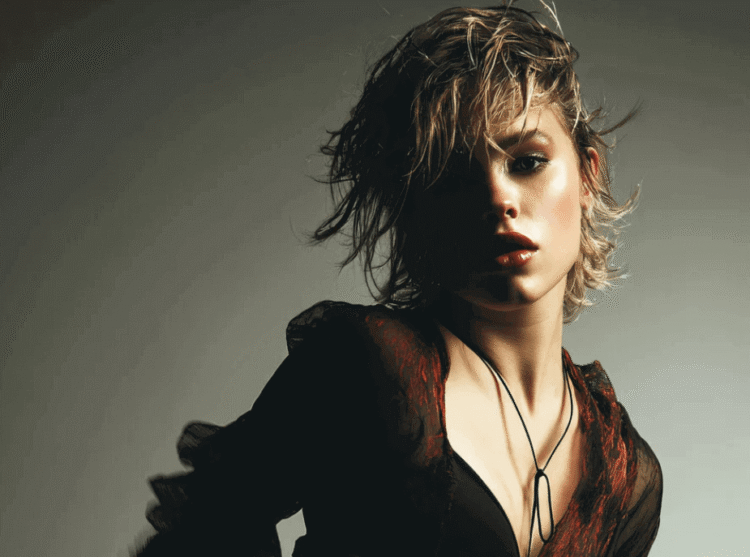
redifing fashion photography
Building Virtual Worlds: AI as the New Studio
Goodbye Green Screen, Hello Generative Scene
AI is rapidly making physical constraints obsolete. Need a runway in the Sahara at golden hour? AI can build it. Want to shoot underwater fashion editorials without leaving the studio? Generative models can create the illusion with cinematic precision.
According to Vogue Business (2024), production houses using AI-driven background generation report up to 60% reduction in costs and three times faster campaign delivery. Beyond cost, the environmental benefit is significant — fewer flights, less equipment, and smaller carbon footprints for fashion shoots.
Virtual Models and Digital Diversity
Perhaps the most visible transformation is the rise of AI-generated models. Platforms like DeepAgency and RenderPeople create photorealistic models of diverse ethnicities, body types, and styles. For many emerging designers and independent bloggers, this democratizes access to high-quality imagery.
However, it also raises questions about authenticity, representation, and creative ethics. Are AI models an inclusive step forward — or a digital replacement that erases human nuance? The answer depends on how responsibly creators use these tools.
Midpoint: When Fashion Bloggers Collaborate with AI
For fashion bloggers and content creators, AI is not competition — it’s collaboration. Instead of waiting for ideal lighting or renting costly studio space, creators can now prototype entire photo concepts from home.
Many influencers are already experimenting with AI assistants that help refine their creative vision, curate visual trends, and even analyze which colors resonate most with their audience. They can simply ask AI website platforms to suggest styling ideas, generate concept art, or test composition layouts before ever taking a single photo.
This interactive creative process brings editorial-level power to the individual blogger, making professional-quality storytelling more accessible than ever before.
Case Studies: How AI Is Transforming Fashion Imagery
1. Levi’s and Digital Models
In 2023, Levi’s partnered with Lalaland.ai to introduce AI-generated models reflecting diverse ethnicities and body types. The move was met with both enthusiasm and debate, highlighting the tension between representation and realism. Still, it showcased AI’s potential to make fashion imagery more inclusive and sustainable.
2. Balmain’s “Virtual Army”
French fashion house Balmain became one of the first major brands to launch a campaign featuring AI-generated digital models. Their “Virtual Army” blurred boundaries between digital art and high fashion, illustrating how storytelling could expand beyond traditional photography.
3. Independent Blogger Success Stories
On platforms like Instagram and Pinterest, emerging creators such as Ava Kim (@avainpixels) use AI tools like Runway ML to merge personal photography with generated fashion environments. Her “AI street couture” series, for example, combines real portraits with futuristic landscapes — garnering viral attention while maintaining her unique aesthetic voice.
Ethical Reflections in an Algorithmic Era
Authenticity in the Age of AI
Fashion thrives on authenticity — the human story behind the image. As AI becomes part of that process, creators must navigate the fine line between innovation and illusion. When does enhancement become deception? Should audiences always know when an image is AI-generated?
Transparency will define credibility in this new age. Forward-thinking bloggers and brands already disclose their use of AI tools, framing them as creative collaborators rather than replacements for human artistry.
Bias, Beauty, and Representation
AI models learn from existing data — and data carries bias. If not properly monitored, algorithms risk reinforcing narrow beauty standards. Researchers at Fashion Innovation Lab (London) found that early AI fashion datasets underrepresented darker skin tones and plus-size figures by over 40%, leading to biased output.
To combat this, ethical creators are curating diverse training datasets and emphasizing inclusive representation in their visual storytelling.
The Future of AI Fashion Photography
From Photographer to Vision Director
As AI matures, the role of the photographer is transforming into that of a vision director — a hybrid creator fluent in both aesthetics and algorithms. The camera is no longer the only creative interface; now, prompts, models, and digital composition tools are equally vital.
According to Harvard Design Review (2025), AI-assisted creators will define the next decade of fashion imagery, combining artistic intuition with machine precision to craft more emotional, inclusive, and multidimensional stories.
Sustainability and Innovation
The fusion of AI and fashion photography also supports sustainability. Virtual productions eliminate wasteful shoots, while generative sampling allows brands to test ideas before committing to physical production. This shift is making fashion storytelling more environmentally conscious — and more imaginative.
Conclusion: The Human Story Behind the Code
AI doesn’t diminish the artistry of fashion photography; it amplifies it. It gives creators infinite tools to express identity, beauty, and emotion — while challenging them to redefine authenticity and ethics.
At its core, fashion has always been about transformation — of fabric, of form, of perspective. AI is simply the next fabric in that evolution: invisible, intelligent, and woven into the creative process itself.
The question isn’t whether AI will replace human creativity. It’s how boldly we’ll use it to expand what creativity means — capturing not just how we look, but how we imagine.